Cash-Out Refinance: How It Works, Requirements, and Cost Breakdown
Life happens—and so do major expenses like medical bills, home renovations, business ventures, and college tuition. When you need a large sum of cash, tapping into your home equity could be a solution.
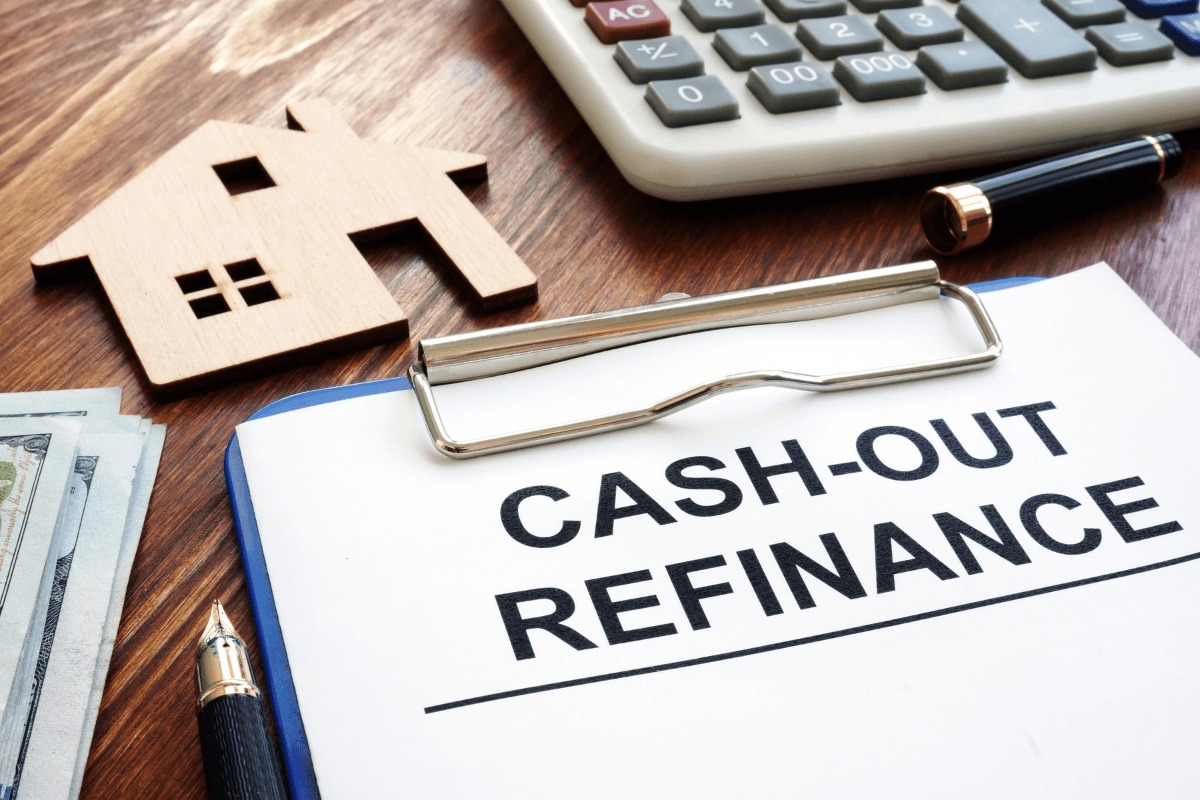
One way to do this is through cash-out refinancing. Basically, you take out a larger mortgage to replace your existing home loan and get the extra cash you need.
But before you commit, it’s important to understand the risks and costs involved. Let’s break down the details so you can figure out if it’s the right financial move for you.
What is a Cash-out Refinance?
A cash-out refinance lets you take out a new mortgage loan for more than what you owe. It pays off your existing loan, and you pocket the difference in cash. This means a higher loan balance and potentially a new loan term and interest rate, which could be higher if mortgage rates have increased.
In contrast, a standard rate-and-term refinance only changes your mortgage rate or loan term. It’s a good option if rates have dropped and you want to lower your monthly mortgage payments.
Many homeowners get a cash-out refi to pay off high-interest debt, manage unexpected medical bills, or fund home renovations. You can use the cash however you want, but make sure to spend it wisely.
6 Steps to Get a Cash-Out Refinance
1. Assess Your Home Equity
Many lenders require homeowners to have at least 20% home equity to qualify for a cash-out refinance, but having more can help you afford a higher loan amount. Figuring out your home equity is simple—it’s just your home’s market value minus your remaining loan balance. For example, if your home is worth $400,000 and you still owe $150,000, your equity is $250,000.
2. Estimate How Much Cash You Need
Before you shop around, take time to estimate the cash you need. This will help you determine how much to borrow and whether you have enough equity to access extra funds. If you’re using the funds to pay off high-interest credit card debt, simply add up your outstanding balances to get a clear target amount.
Use a mortgage calculator to run the numbers and see if a cash-out refi is the right move for you.
3. Check Your Credit & Financial Standing
Like any other loan, cash-out refinancing has specific lender requirements, which can vary across lenders. Mortgage lenders generally consider your credit score, loan-to-value (LTV) ratio, and debt-to-income (DTI) ratio. The stronger your financial profile, the better your odds of securing a higher loan amount and more favorable interest rates.
4. Compare Lenders & Rates
Once you’re ready to proceed, shop around and apply with three to five lenders to compare offers and get the best deal. Not sure where to start? Refinance.com makes it easy for you. Just enter a few details, and you’ll get a list of good mortgage lenders and interest rates that match your needs. From there, you can compare options, choose a lender, or even apply for pre-qualification.
5. Apply for a Loan
A cash-out refinance means taking out a new loan, so you’ll need to go through the usual loan application process. Preparing key documents, like bank statements, tax returns, and proof of income, ahead of time will keep things moving smoothly.
6. Receive the Funds
After closing, your lender will pay off your existing loan and give you the remaining amount as a lump sum. If you're approved for a $220,000 loan and still owe $150,000, your cash-out is $70,000. However, closing costs, like origination and appraisal fees, may be deducted from this amount if you choose to roll them into your loan.
Cash-Out Refinance Requirements
To get a cash-out refinance, you’ll need to meet certain lender requirements, which can vary. It’s best to check with multiple lenders and compare them before applying.
Here are some common eligibility criteria to keep in mind:
620 Minimum Credit Score
Most lenders require a credit score of at least 620 to refinance a home loan. But even if you have a poor credit score, cash-out refinancing could still be an option, though your choices might be limited. To increase your chances of getting the best home loan refinance rates and terms, maintain a good credit score and credit history.
20% Home Equity
Lenders typically recommend having at least 20% equity in your home to refinance a conventional mortgage. And if you're going for a cash-out refinance, you may need even more. The more you've paid down your mortgage, the lower your balance, and the more cash you can potentially access.
50% Maximum DTI Ratio
Your debt-to-income (DTI) ratio measures how much of your gross monthly income goes toward debt payments. Lenders prefer a lower DTI. For a cash-out refinance, it should typically be less than 50%. Keep your DTI in check for better chances of approval and securing favorable loan terms.
Other Lender Requirements
Lenders also consider other key factors like income sources, job history, property type, and minimum wait period. These details can impact your eligibility, so it's important to know what they are looking for.
How Much Can You Borrow?
The amount of home equity you can tap depends on your home’s current value. Most mortgage lenders often let you borrow up to 80% of your home’s value, but this can actually go up to 97% in certain products. It is better to check what each lender offers and compare their programs.
For example, your home is valued at $400,000, and you owe $200,000 on your mortgage.
If your lender allows you to borrow 80% of your home’s value, you can refinance up to $320,000. After paying off your existing balance, you’ll receive the $120,000 cash-out.
Your new loan principal is $320,000.
| Cash-Out Refinance Calculation | |
|---|---|
| Home Value | $500,000 |
| Maximum Loan Amount | $320,000 ($400,000 x 0.80) |
| Loan Balance | $200,000 |
| Maximum Cash Out | $120,000 ($320,000 - $200,000) |
To see if a cash-out refinance makes sense for you, use a refinance loan calculator to estimate your new monthly payment, total costs, and cash payout.
How Much Does It Cost to Refinance?
Like your first mortgage, a cash-out refinance comes with closing costs typically ranging from 2% to 6% of your new loan amount. To avoid paying upfront, you can roll these costs into your new mortgage loan. But that reduces the cash you’ll be able to take home.
According to Experian, here are the common fees included in your refinancing closing costs:
| Fee | Amount |
|---|---|
| Application fee | $75 - $500 |
| Appraisal fee | $300 - $1,000 |
| Underwriting fee | $300 - $900 |
| Credit report fee | $10 - $100 per borrower |
| Origination fee | 1% - 1.5% of the loan amount |
| Title services | $300 - $2,000 |
| Survey fee | $150 - $400 |
| Attorney fees | $500 - $1,000 |
| Recording fee | Varies by county, sometimes up to $250 |
| Tax service fee | Varies by county |
On top of your closing costs, your refinanced mortgage may also come with a new interest rate, which could raise or lower your monthly mortgage payments. While market conditions play a big role, your credit score and lender choice also matter. To get the best deal, shop around and compare offers from multiple lenders.
Cash-Out Refinance Pros and Cons
| Pros | Cons |
|---|---|
| Often offers lower rates than credit cards and personal loans. | A larger loan amount means higher mortgage payments, especially if rates have increased. |
| Consolidates your existing mortgage and refinanced loan into one loan and a single monthly payment. | Comes with closing costs that typically range from 2%–6% of the new loan amount. |
| Mortgage interest on the funds used for home improvements may be tax-deductible. | Defaulting on payments could put your home at risk of foreclosure. |
Key Takeaway
A cash-out refinance can be a smart way to access extra funds for home improvements, business ventures, debt consolidation, and other major expenses.
Having a good credit score and solid financial standing can make approval easier, but even if your credit scores are low, cash-out refinancing could still be possible.
Most lenders let you borrow up to 80% of your home’s value. However, the actual amount, interest rates, and loan terms depend on your financial profile and lender requirements. So be sure to check out offers from different mortgage lenders. You can easily find lenders and compare current home refinancing rates using our platform.
Like your original mortgage, refinancing comes with closing costs, typically 2% to 6% of your new loan amount. If a cash-out refinance aligns with your financial goals, make sure to use the funds wisely and stay on top of your mortgage payments.